
Blog #4: Magnesium: The Mineral Behind 300 Processes Your Body Runs Every Day
This one runs more of your body’s background processes than almost any other nutrient.
If you asked most people to name the most important mineral in the human body, you’d hear calcium. Maybe iron. Possibly zinc. Magnesium would rarely make the list — and that gap between its importance and its reputation is part of the reason nearly half of Americans are running low on it.
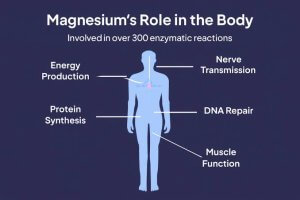
Magnesium is involved in more than 300 enzymatic processes. Energy production, muscle contraction and relaxation, nerve signaling, heart rhythm, blood sugar regulation, protein synthesis, DNA repair, bone formation — all of these depend on magnesium. It is, in a very literal sense, the mineral that keeps the machinery running.
And for most people living a modern life, it’s quietly running low.
Why deficiency is so widespread
The third story is everything else that depletes it. Fluoride, present in roughly three-quarters of American drinking water, binds to magnesium and blocks its absorption. Caffeine increases renal excretion. Alcohol increases excretion further. Common medications — including antacids like omeprazole, certain antibiotics, diuretics, and oral contraceptives — all reduce magnesium availability through various mechanisms. And the purified water many people drink, stripped of its mineral content, eliminates what was once a meaningful dietary source.
The result is that approximately 45 percent of Americans are outright deficient, and a substantially higher percentage fail to reach even the minimum recommended daily intake.

What magnesium actually does
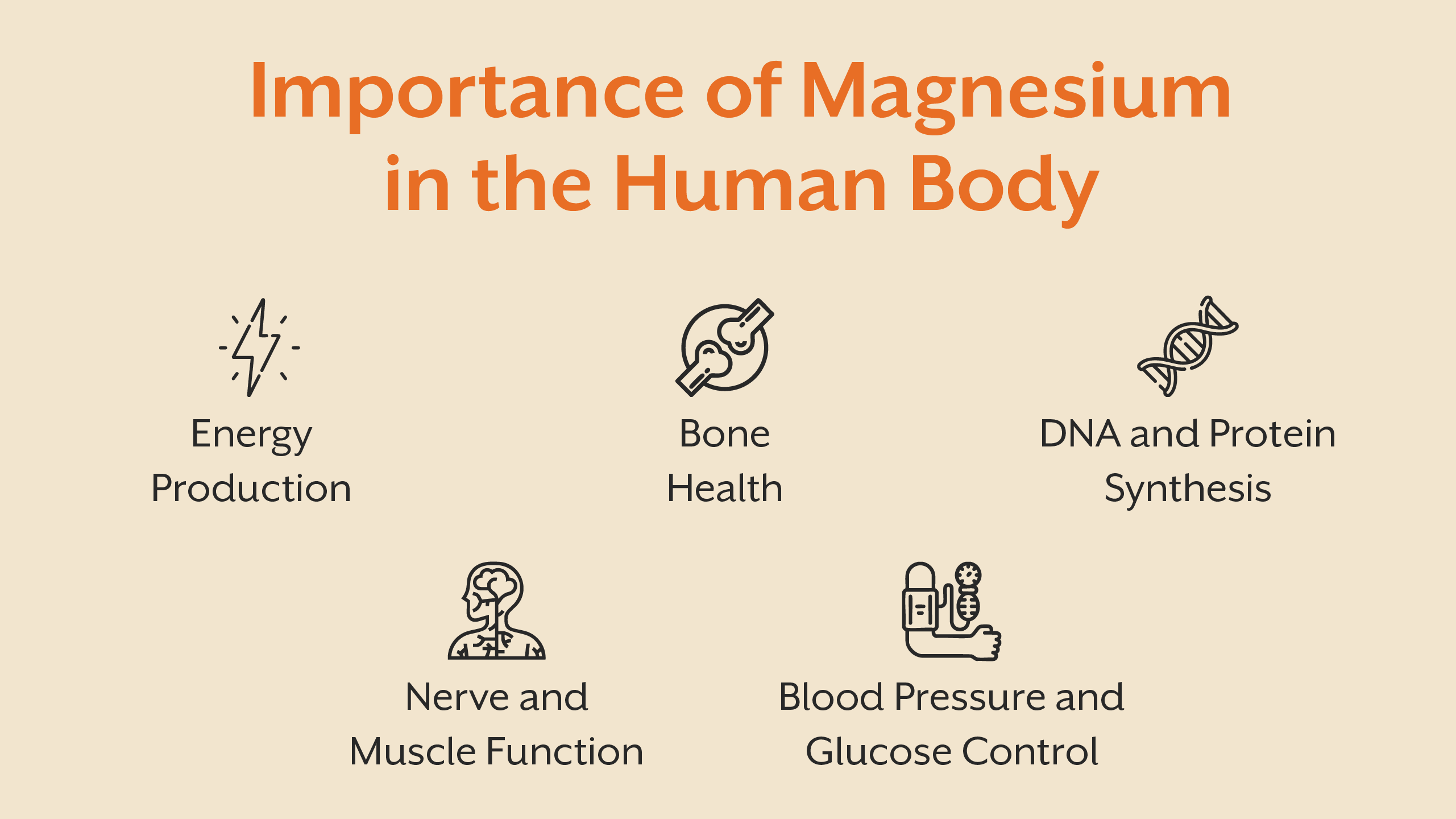
Energy production. ATP — adenosine triphosphate, the molecule your cells use for energy — must be bound to magnesium to be biologically active. Without sufficient magnesium, your cells cannot efficiently produce or use energy. This is one reason that fatigue is one of the earliest signs of magnesium insufficiency.
Muscle function. Calcium causes muscles to contract. Magnesium causes them to relax. These two minerals work in direct opposition, and your body needs both in balance to regulate normal muscle function. When magnesium is low, calcium’s contracting effect goes largely unopposed. The practical results are familiar: muscle cramps, spasms, tension, and restless sleep. In cardiac tissue, this imbalance affects heart rhythm. Magnesium functions as the body’s natural calcium antagonist — it is, in a very real sense, the brake pedal on a system that calcium keeps accelerating.
Nervous system. Magnesium regulates the activity of the nervous system, including the release of neurotransmitters and the excitability of nerve cells. It has a calming, regulatory effect on the nervous system — which is why magnesium insufficiency is associated with heightened stress responses, anxiety, and poor sleep. It’s also why magnesium supplementation, particularly with forms that cross the blood-brain barrier, has shown benefit in research on sleep quality and mood.
Blood sugar regulation. Magnesium is required for the proper function of insulin receptors. Research has consistently found elevated rates of low magnesium in people with insulin resistance and type 2 diabetes, and magnesium supplementation has improved insulin sensitivity in several randomized controlled trials.
The clinical indicators that often accompany insufficiency — muscle cramps, poor sleep, fatigue, anxiety, and headaches — are common enough that they’re often attributed to stress or aging rather than to a correctable nutrient gap.

The connection to vitamin D
One more piece of the magnesium story that rarely gets mentioned: your body requires magnesium to convert vitamin D into its active steroid hormone form. If you’re supplementing vitamin D but running low on magnesium, you may not be getting the full benefit of that supplementation. The two nutrients are interdependent, not independent — which is one of the clearest arguments for addressing them together. This is why at Livin’ Well we recommend the Wellness Pack so that these synergistic nutrients are taken together.

These statements have not been evaluated by the Food and Drug Administration. This content is for educational purposes and is not a substitute for individualized medical advice.